
Citing the sharp rise in food prices, economists at a foreign bank have forecast a steeply higher retail inflation print for July, pegging it at 6.7 per cent, up 190 basis points from the previous month. Deutsche Bank India economists led by chief economist Kaushik Das, in a report on Monday ahead of the monthly inflation print and the Reserve Bank's monetary policy review, said that the July consumer price-based inflation index (CPI) is likely to print at 6.7 per cent on-year as against 4.8 per cent in June. The Reserve Bank is widely believed to leave the key interest rates unchanged for the fourth time in its upcoming bi-monthly monetary policy decision on August 10.

Rating agency Icra on Wednesday said while there is some evidence of the economic recovery becoming broad-based in the third quarter of fiscal 2022, it is yet to attain the durability being sought by the Monetary Policy Committee (MPC) as a precursor to policy transmission. The agency expects the real GDP to expand 6-6.5 per cent year-on-year in the third quarter of FY2022 (+8.4 per cent in Q2 FY2022). It also sees the RBI maintaining the status quo in the upcoming monetary policy review to be held in February.

All that you must know about the pros and cons of gift deeds, tax implications, essentials, documents required, conditions, etc...

The panel was set up to suggest ways to reform India's monetary policy.

In the backdrop of an over four-decade high inflation, the US Federal Open Market Committee has raised its key policy interest rate by 75 basis points to 2.25-2.50 per cent, anticipating that the increase in the interest rates will be "appropriate". Hiking interest rates typically cool demand in the economy, thereby putting a brake on the inflation rate. The US Federal Reserve in its June meeting too raised the interest rate by 75 basis points, which was the steepest hike since 1994.

HCL Technologies was the biggest gainer in the Sensex pack, rising 5.58 per cent, followed by Tata Consultancy Services and Infosys, State Bank of India, Tech Mahindra, Tata Steel, NTPC and Wipro. In contrast, Nestle, Bharti Airtel, Maruti and ITC were among the laggards.

On the back of sound macroeconomic policies and softer commodity prices, India's growth momentum is likely to be sustained in 2023-24 in an atmosphere of easing inflationary pressures, said the Reserve Bank's annual report released on Tuesday. It, however, added that slowing global growth, protracted geopolitical tensions and a possible upsurge in financial market volatility following new stress events in the global financial system could pose downside risks to growth. "On the back of sound macroeconomic policies, softer commodity prices, a robust financial sector, a healthy corporate sector, continued fiscal policy thrust on quality of government expenditure, and new growth opportunities stemming from global realignment of supply chains, India's growth momentum is likely to be sustained in 2023-24 in an atmosphere of easing inflationary pressures," it said.

Most banks are yet to pass on the benefits to the consumers.

Policy rates have been reduced substantially in 2015.

Striking a different note from its peers, US brokerage Bank of America Securities has maintained that the Reserve Bank will leave rates unchanged next week, recognising growth-focused and capex-driven fiscal expansion, which though poses huge price pressure and interest rate risks later. The RBI's rate setting panel Monetary Policy Committee (MPC) will begin its deliberations next Monday and announce the policy moves on Wednesday (February 9) in the backdrop of a massive spike in bond yields post the Budget. Almost all major central banks are in the process of hiking rates to tame inflation.

India is poised to be the fastest-growing major economy in the world and an engine of global growth despite global headwinds, says leading industrialist and Aditya Birla Group Chairman Kumar Mangalam Birla. The economic activity in India has witnessed a sharp recovery to pre-pandemic levels on the back of a rapid and widespread rollout of the vaccination programme, Birla said in the latest annual report of UltraTech Cement Ltd. "A strong digital ecosystem, fiscal and monetary policy and various government schemes helped small and medium enterprises and the worst affected sections of the population to survive while reviving demand and bringing the economy back on track," said Birla while addressing UltraTech's shareholders.

The Monetary Policy Committee (MPC) may go for a hike of up to 0.25 per cent in the reverse repo rate at which the RBI absorbs excess liquidity and leave the repo rate at which it lends, to narrow the policy rate corridor, a British brokerage said on Thursday. "Growth concerns amid spread of the Omicron variant and relatively benign inflation out-turns provide the RBI with enough room to maintain its growth-supportive monetary policies," analysts at Barclays said, ahead of the resolution announcement next week. The RBI will hike the reverse repo rate by 0.20-0.25 per cent, given its liquidity management actions, it said.

Among major Sensex movers, ITC rose the most by 1.70 per cent, Wipro by 1.43 per cent, Tech Mahindra by 1.36 per cent and Nestle India by 1.27 per cent. Other gainers included HCL Tech, Asian Paints and Reliance. On the other hand, ICICI Bank, NTPC, UltraTech Cement and Tata Steel traded with a loss of up to 0.82 per cent.

Among the Sensex firms, Asian Paints, Tata Steel, HCL Technologies, Nestle, Maruti, JSW Steel, NTPC and Larsen & Toubro were the major laggards. Sun Pharma, Bajaj Finserv, Reliance Industries, State Bank of India and Bharti Airtel were the gainers.

Business houses expect rate cut in next RBI policy.

Investors' wealth soared by Rs 10.58 lakh crore in three days of the market rally, where the BSE benchmark jumped over 2 per cent, and hit an all-time high on Monday. Extending its winning momentum to the third day running, the 30-share BSE Sensex jumped 363.20 points or 0.49 per cent to settle at 74,014.55. During the day, it zoomed 603.27 points or 0.81 per cent to hit its record high of 74,254.62.

The wholesale price-based inflation eased to 15.18 per cent in June on lower prices of manufactured and fuel items, even though food articles remained costly. The Wholesale Price Index-based inflation was at a record high of 15.88 per cent last month and 12.07 per cent in June last year. The WPI inflation in June has bucked the three-month rising trend but remained in double-digit for the 15th consecutive month beginning April last year.

Industrial growth slowed to 3.6 per cent in February, 2011, compared to 15.1 per cent expansion in the year-ago period, dragged down by poor performance of manufacturing and mining sectors.

Investors have become poorer by over Rs 10.36 lakh crore in the last four trading sessions as the domestic equity benchmarks extended their losses amid weak global trends. The Sensex and Nifty closed in the red for the fourth straight session on Friday amid continued selling by foreign institutional investors. The BSE Sensex ended 427.44 points or 0.72 per cent lower at 59,037.18.

Reserve Bank will hold its first bi-monthly monetary policy review for 2016-17 on Tuesday.
.jpg)
Food and fuel inflation in India have remained high for several years, the paper said, adding to durably reduce the current high inflation, the monetary policy stance needs to remain tight for a considerable length of time.

'There are lots of low hanging fruits and often no real impediment to plucking them.'

With high credit growth and healthy asset quality, listed commercial banks are expected to report steady growth in earnings during the fourth quarter ended March 2024 (Q4 FY24). Profits are expected to grow at 9.6 per cent year-on-year (Y-o-Y) and net interest income (NII) by 8.7 per cent in Q4 FY24, according to Bloomberg analysts' estimates. According to Motilal Oswal Securities, while bank credit growth has been robust, deposit growth has also gathered pace.

Mortgage lender HDFC Ltd on Friday hiked its lending rate by 50 basis points hours after the Reserve Bank raised the benchmark interest rate to tame inflation. The move would increase EMIs for housing loans by the firm. "HDFC increases its Retail Prime Lending Rate (RPLR) on Housing loans, on which its Adjustable Rate Home Loans (ARHL) are benchmarked, by 50 basis points, with effect from October 1, 2022," the country's biggest housing finance company said in a statement.

The government is confident of meeting the fiscal deficit target of 5.9 per cent of gross domestic product (GDP) and the nominal GDP target of 10.5 per cent despite pressure in the initial months of FY24, Economic Affairs secretary Ajay Seth told Business Standard. Normally the initial months of any financial year see proportionally a higher fiscal deficit because the expenditure is evenly paced while revenue picks up in the later months, he said. "This year the proportional fiscal deficit so far is much closer to the target than in most other years.

There hasn't been any dramatic moment in the first act (the Budget) but nobody would complain. It's par for the course as long as the figures don't change in the main Budget, which will be presented after general elections.
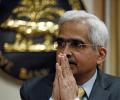
The RBI's rate-setting panel MPC on Monday began its three-day deliberation amid expectations of another round of hike in benchmark interest rates to contain inflation that continues to remain above the central bank's upper tolerance level. RBI Governor Shaktikanta Das will announce the decision of the Monetary Policy Committee after deliberations on Wednesday. Das has already indicated that there may another hike in the repo rate, though he refrained from quantifying it.

'The nominal GDP growth assumption for FY25 may be revised upwards on higher growth expectations.'

EPS has had its way on most things, alliance-wise. A week earlier, he reiterated that he would not re-admit OPS and Sasikala Natarajan back in the party. It was a message not just to detractors in the AIADMK. It was even more so for the BJP leadership in Delhi. Even more important for the AIADMK was their demand for accepting EPS as the chief ministerial candidate of any alliance that the party would form, observes N Sathiya Moorthy.
India will drive growth in the Asia-Pacific (Apac) region as the growth engine is likely to shift from China to South and Southeast Asia in the coming years, S&P Global Ratings said in a report on Tuesday. The rating agency's report projected China's growth to slow down to 4.6 per cent by 2026 from an estimated 5.4 per cent in 2023. India is likely to clock 7 per cent economic growth from 6.4 per cent estimated for 2023.

Consumer price-based inflation jumped to 6.95 per cent in March, mainly on account of costlier food items, according to government data released on Tuesday. The Consumer Price Index (CPI) based inflation was 6.07 per cent in February.

While India won't be immune to global spillovers, we need to create the macro preconditions for sustained growth. Policy agility, prudence, and resilience will be key, suggests Sonal Varma.

'Urjit Patel's appointment is a right decision and in the interest of the country.'

Reserve Bank Governor Shaktikanta Das on Wednesday said the decision to tweak policy rates was not in his hand as he himself is driven by the situation on the ground. In April, the Reserve Bank in a surprise move hit the pause button and decided to keep the key benchmark policy rate at 6.5 per cent. Prior to it, the Reserve Bank of India (RBI) was on a rate hiking spree, raising the repo rate by 250 basis points since May 2022.

Reserve Bank Governor Shaktikanta Das on Wednesday said in the wake of appreciating US dollar, the movement of rupee has remained least disruptive as compared to its peers, and the size of foreign exchange reserve is comfortable. On a financial year basis (from April to October 2022), the rupee has appreciated by 3.2 per cent in real terms, even as several major currencies have depreciated, he said while announcing the latest set of bi-monthly monetary policy. "The story of the rupee has been one of India's resilience and stability," the Governor said while pointing out that the appreciation of the US dollar this year, which precipitated large-scale depreciation of all major global currencies including the Indian rupee, has drawn wide attention.

Fitch Solutions sees RBI keeping benchmark interest rates unchanged during the fiscal to March 2022 following its decision to buy Rs 1 lakh crore of government bonds. "We had initially expected another policy rate cut to arrest the rise in government bond yields since the Union Budget announcement in February. "However, having an explicit bond purchase guidance from the RBI following the announcement of the G-SAP will also achieve a similar effect, if not even be more effective than a rate cut on capping the increase in bond yields," it said in a note. The Reserve Bank of India (RBI) held its policy repurchase (repo) rate unchanged at 4 per cent at its monetary policy meeting on April 7.

The economy is projected to clock 7.4 per cent growth.

Top laggards in the Sensex pack included Kotak Bank, ICICI Bank, HDFC Bank, Tata Motors, L&T, SBI, Tata Steel and Axis Bank, falling up to 3.46 per cent.

Moody's on Thursday said the new 'inflation targeting' mechanism is a "credit positive" move.

Fitch said the full implications of Patel's resignation will only become clearer once there is some indication of the RBI's policy approach under his replacement, Shaktikanta Das
 © 2026 Rediff.com - Advertise with us - Disclaimer - Privacy Policy - Sitemap - Feedback - About us - Terms of use - Grievances